Where this shows up
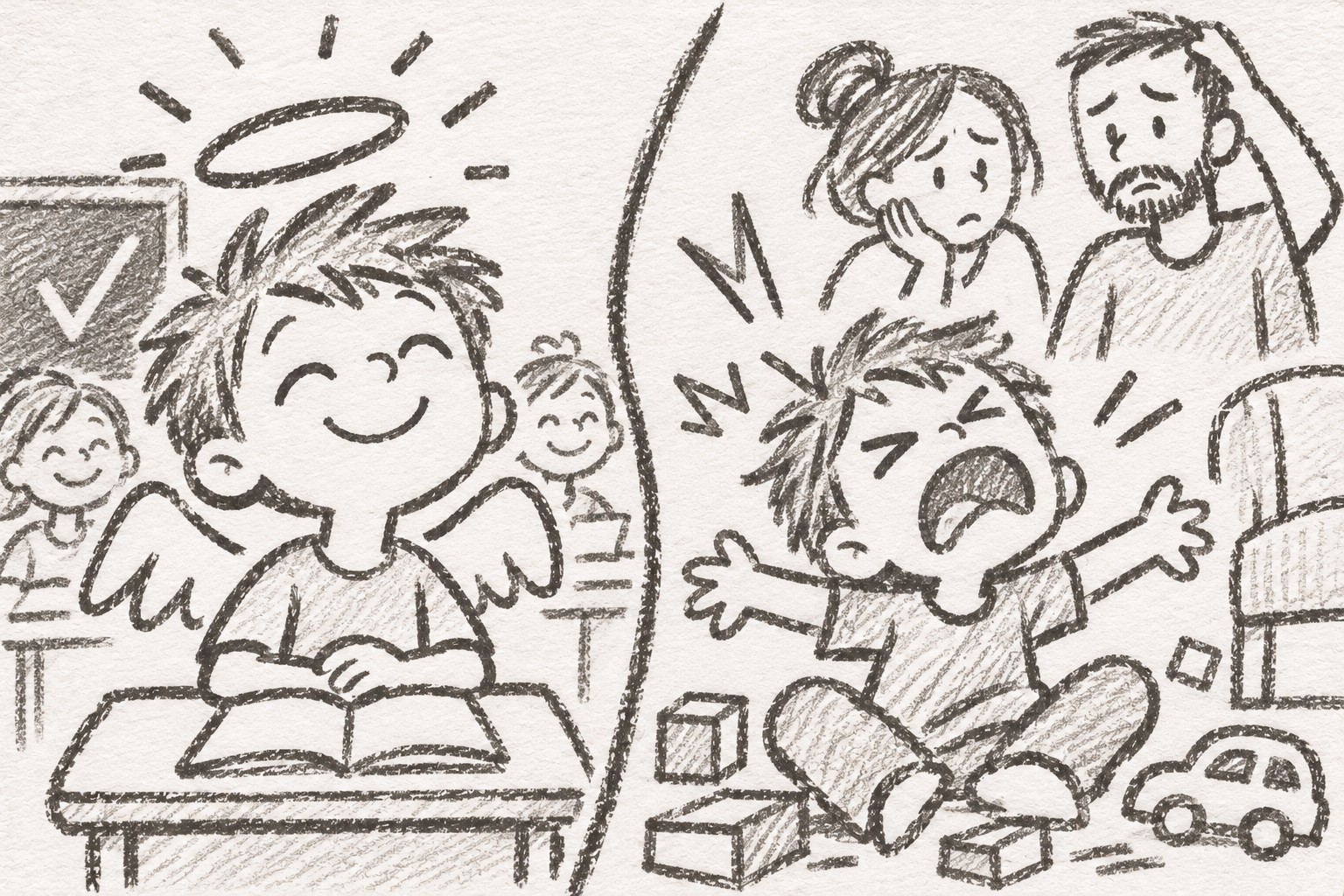
At the parent-teacher conference, you hear that your child is wonderful, diligent, never a problem. You walk home filled with quiet pride. Twenty minutes later in the kitchen, a dramatic storm erupts over a drinking glass that happens not to be the blue one, and you stand there frozen, trying to reconcile two completely contradictory accounts of the exact same child.
Every family experiences some variation of this paradox. Out in the world, everything is composed; under our roof, the dam breaks.
What we try first
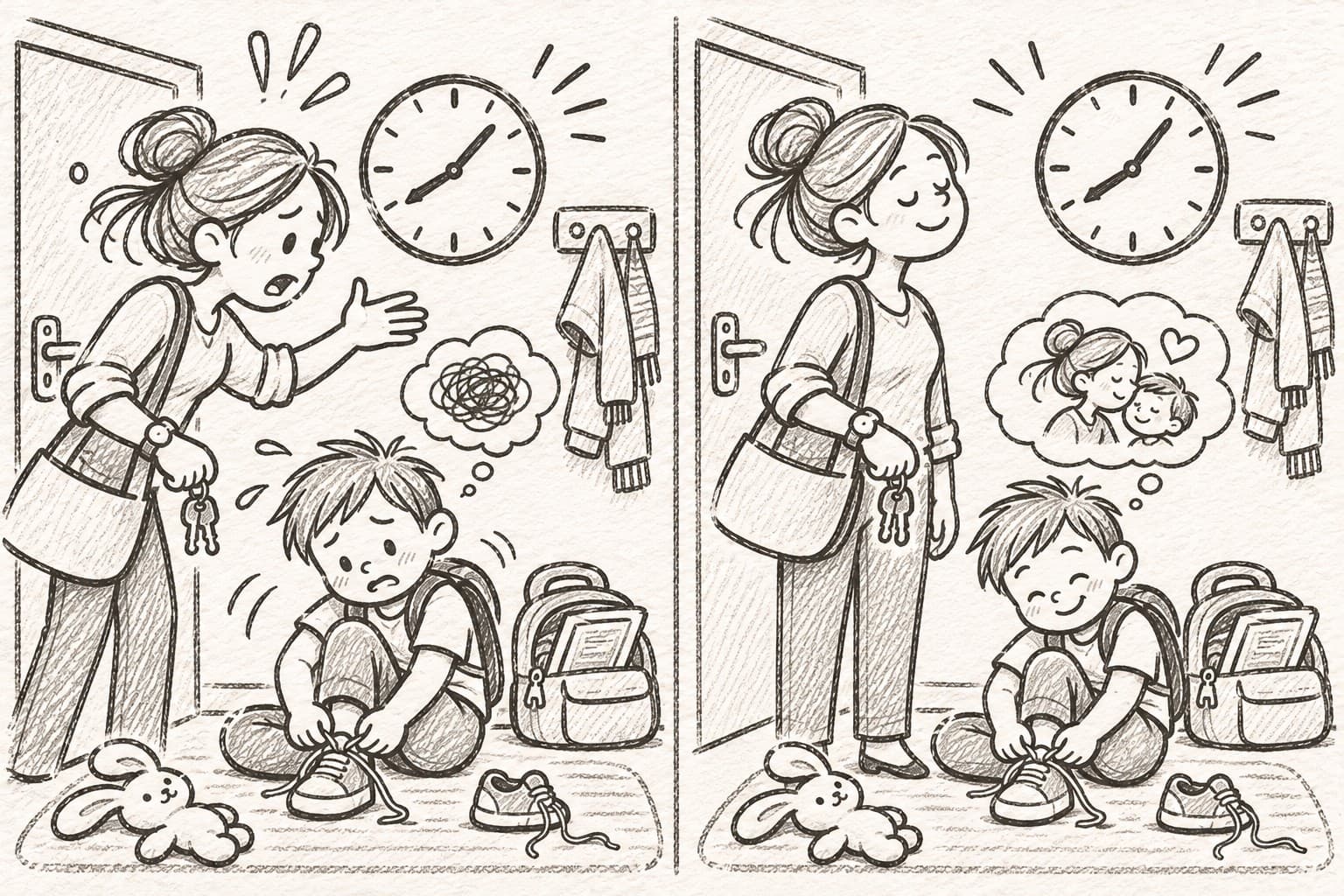
Our initial instinct is to assume we failed at discipline. We tighten house rules, enforce rigid consistency, and attempt to make home mirror the structured expectations of school. Or we swing to the opposite extreme, taking the outburst personally as a blatant lack of respect. Both approaches press directly where there is no actual injury.
What changes the picture
A child does not fall apart at home because they respect us less. They fall apart because home is the only sanctuary where they can safely stop holding themselves together.
Self-regulation is work—immensely taxing psychological work. In school, a child performs that labor for six or seven uninterrupted hours: sitting when they wish to move, staying silent when they burn to speak, enduring boredom, swallowing perceived unfairness, and guarding their social standing among peers. None of this registers as struggle from the outside because it looks like good behavior.
That accumulated psychological pressure must discharge somewhere. And it is never discharged where things are worst; it is discharged where it feels safest. A child does not punish us with an afternoon meltdown. They have simply chosen the single address where their heart feels secure enough to collapse.
This realization is disorienting, yet strangely comforting. The hardest ten minutes of the day are often living proof that your home is doing its sacred job. A child who is flawless both in the classroom and in the living room has nowhere on earth to be fragile, and every human soul needs one corner of the world where vulnerability is permitted.
This does not mean unruly behavior goes unguided. It simply means we must first decipher what the emotion is doing before we attempt to steer it.
The same dynamic at work
We see the identical phenomenon in adults who remain impeccably professional in front of demanding clients, only to unravel in an internal team meeting over a trivial setback. That is rarely a conflict with colleagues; it is the invoice for a polished performance that ran too long. A workplace where no one ever displays fatigue is not a healthy team—it is a culture where showing humanity has become prohibitively expensive.
What you can do today
For the first ten minutes after your child walks through the front door, ask zero questions and make zero demands. Don't mention homework, don't ask about backpacks, don't inquire how their day was. Just be physically present, offer a quiet beverage, and let the heavy armor fall to the floor.
The underlying habit
Seek first to understand. Understanding here does not mean excusing destructive behavior; it means reading the emotional function beneath the outburst. Until we read that message correctly, we keep solving the wrong problem and wondering why our solutions never hold.