Where this shows up
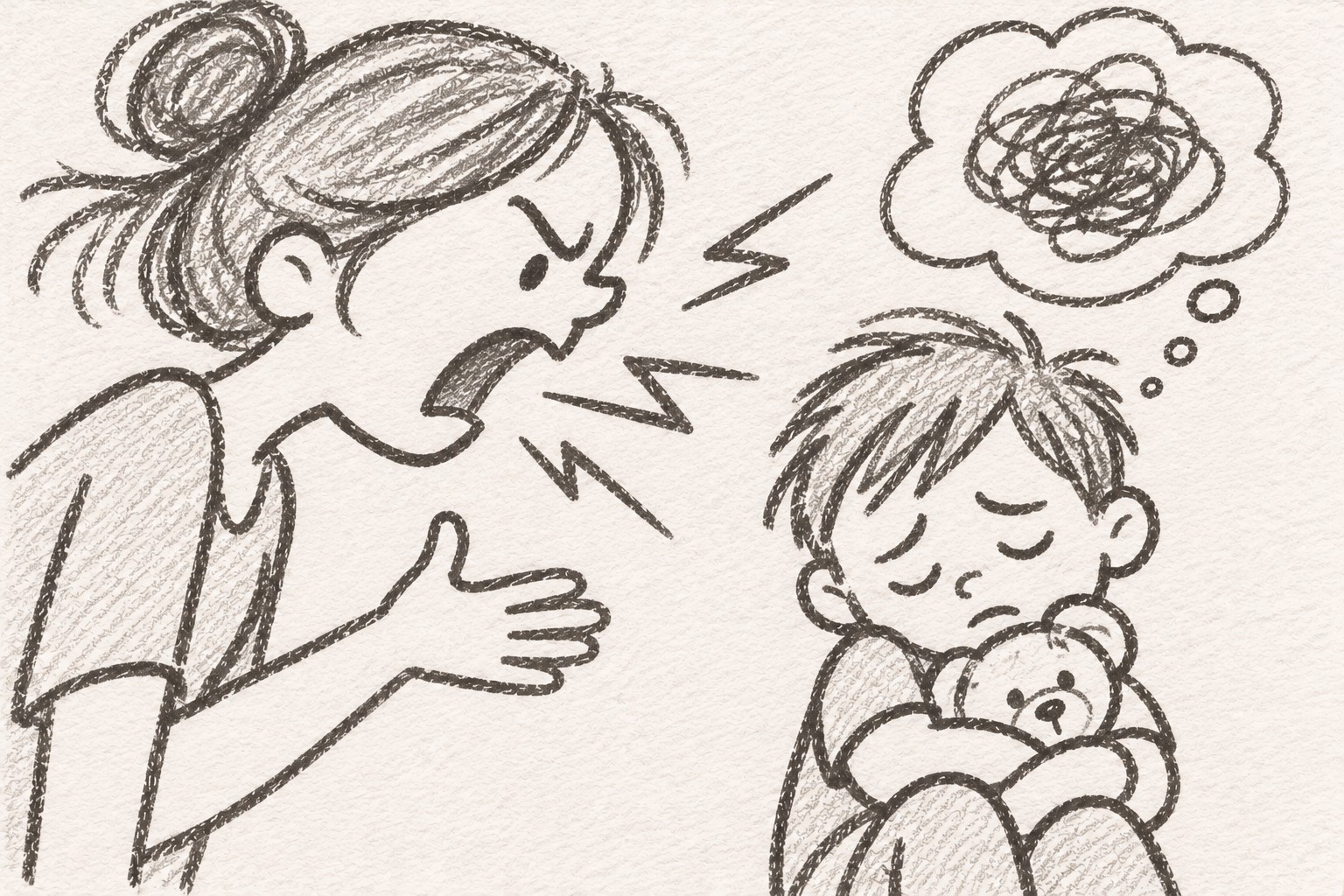
We raise our voice because something our child is doing rubs against our raw nerves. The child freezes and goes silent. For a fleeting second, a wave of relief washes through our system—followed almost immediately by a sick feeling of shame. Later that evening, when the house is still and the child is asleep, we sit in the dark and make a solemn vow: never like that again.
The resolution holds for two days. On the third day, in the exact same circumstance, the exact same reaction replays itself.
What we try first
We try raw willpower and self-control. We tell ourselves to breathe deeply, count to ten, remember articles on gentle parenting, and hold our tongue. It works when we are rested. But when we are sleep-deprived and pressed for time, self-control snaps like dry kindling. We were treating a structural fatigue problem with willpower.
What changes the picture
Yelling is not a message directed at the child. The child was merely the captive audience; they were never the actual address.
Raising our voice is the sound of an adult running out of tools. It is the acoustic flare fired when internal reserves have completely dried up. We do not yell because our child behaved in a particularly novel or wicked way; we yell because we reached the bottom of our own emotional barrel and had nothing else left to reach for.
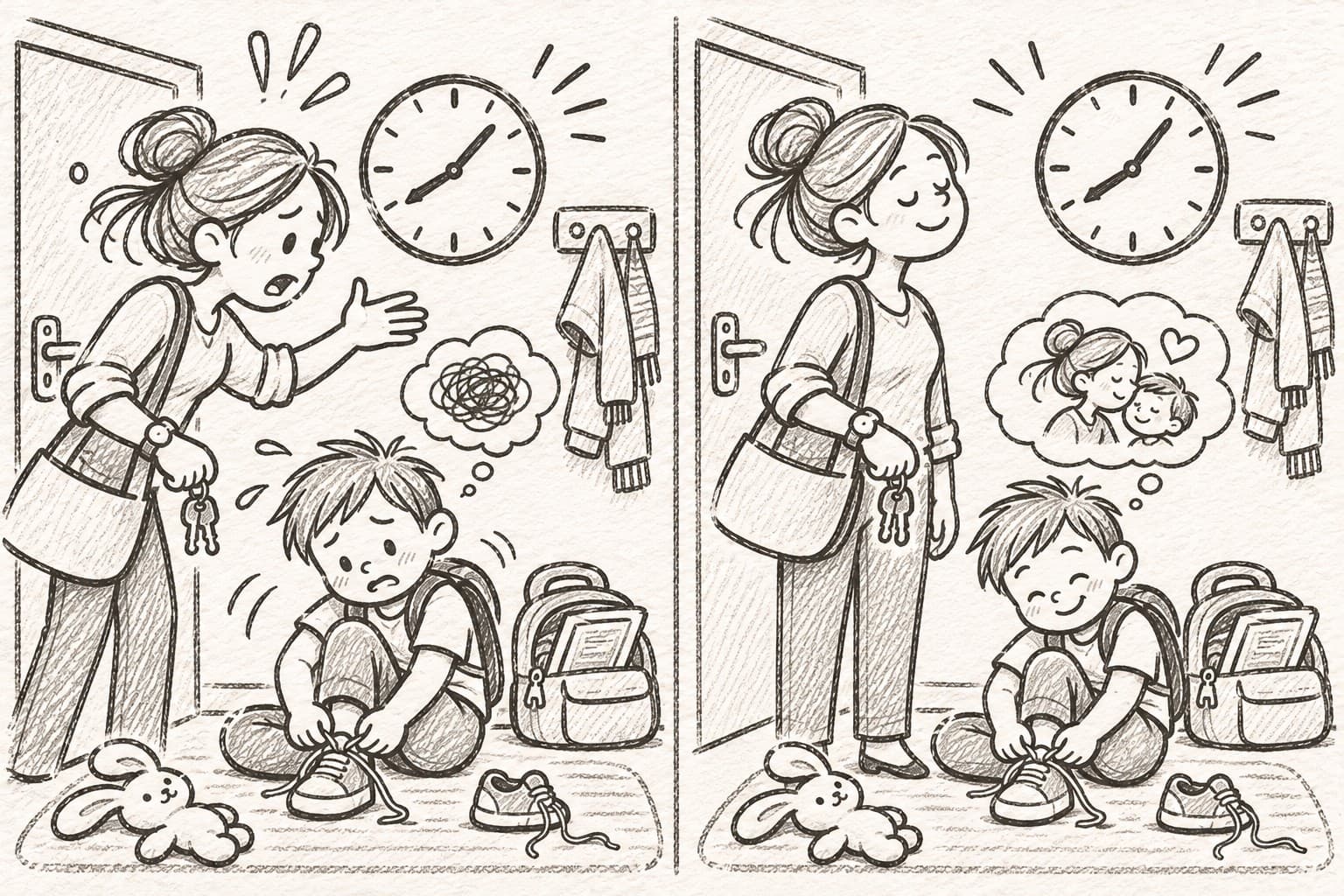
Notice the patterns: the outbursts almost never happen on a relaxed Saturday morning in the park. They happen at 7:45 AM before school, at 6:30 PM while preparing dinner, at 9:00 PM during the bedtime struggle, or on Sunday evenings. These are not flaws in moral character. They are structural collision points in the schedule where a single adult is attempting to juggle three complex tasks at the exact same moment.
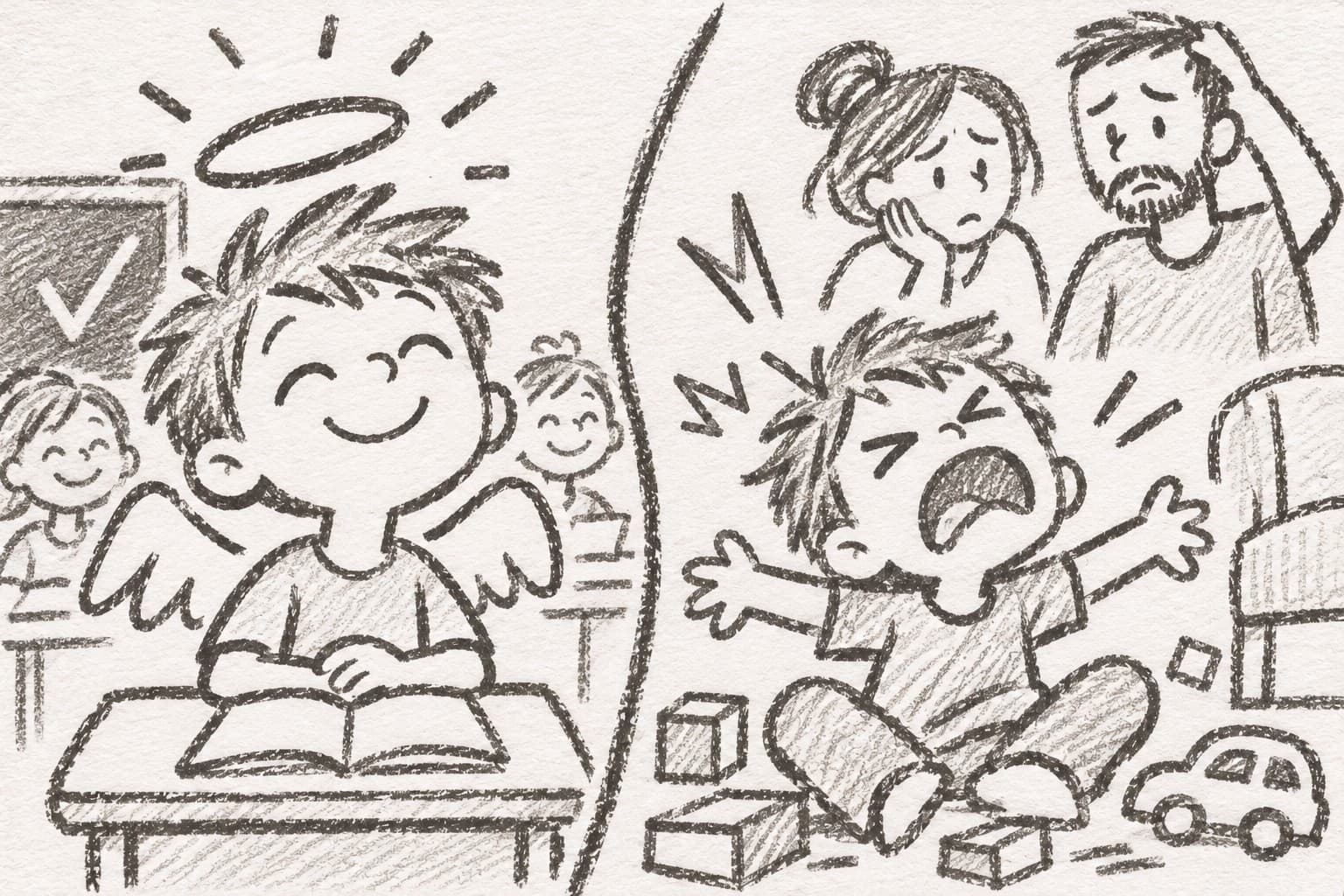
What a child learns from yelling is not moral discernment; they learn threat prediction. After a few months, a child accurately maps out the danger zones of the day. They retreat, suppress their needs, and walk on eggshells. To exhausted parents, this looks like peace in the home. In reality, it is a constricted emotional space: the child has learned that during specific hours, bringing news or asking questions is unsafe.
That is why yelling cannot be conquered in that split second in the hallway. It is resolved a week earlier, inside the family calendar.
The same dynamic at work
A manager who raises their voice in a meeting is not demonstrating leadership in that moment; they are publicly announcing that they have run out of competent options. Employees read that signal with laser accuracy. Consequently, after such a meeting, the team does not gain energy—they simply begin withholding crucial information.
What you can do today
Write down the last three situations in which you raised your voice. Chances are they are the exact same three situations, occurring in the exact same time slots. That is an architectural flaw in your schedule, not an incurable defect of your soul. And schedules can be redesigned.
The underlying habit
Be proactive. Proactivity is not heroic endurance at the moment of peak exhaustion. Proactivity is anticipating the collision point seven days in advance and clearing the obstacle before you ever reach it.