Where this shows up
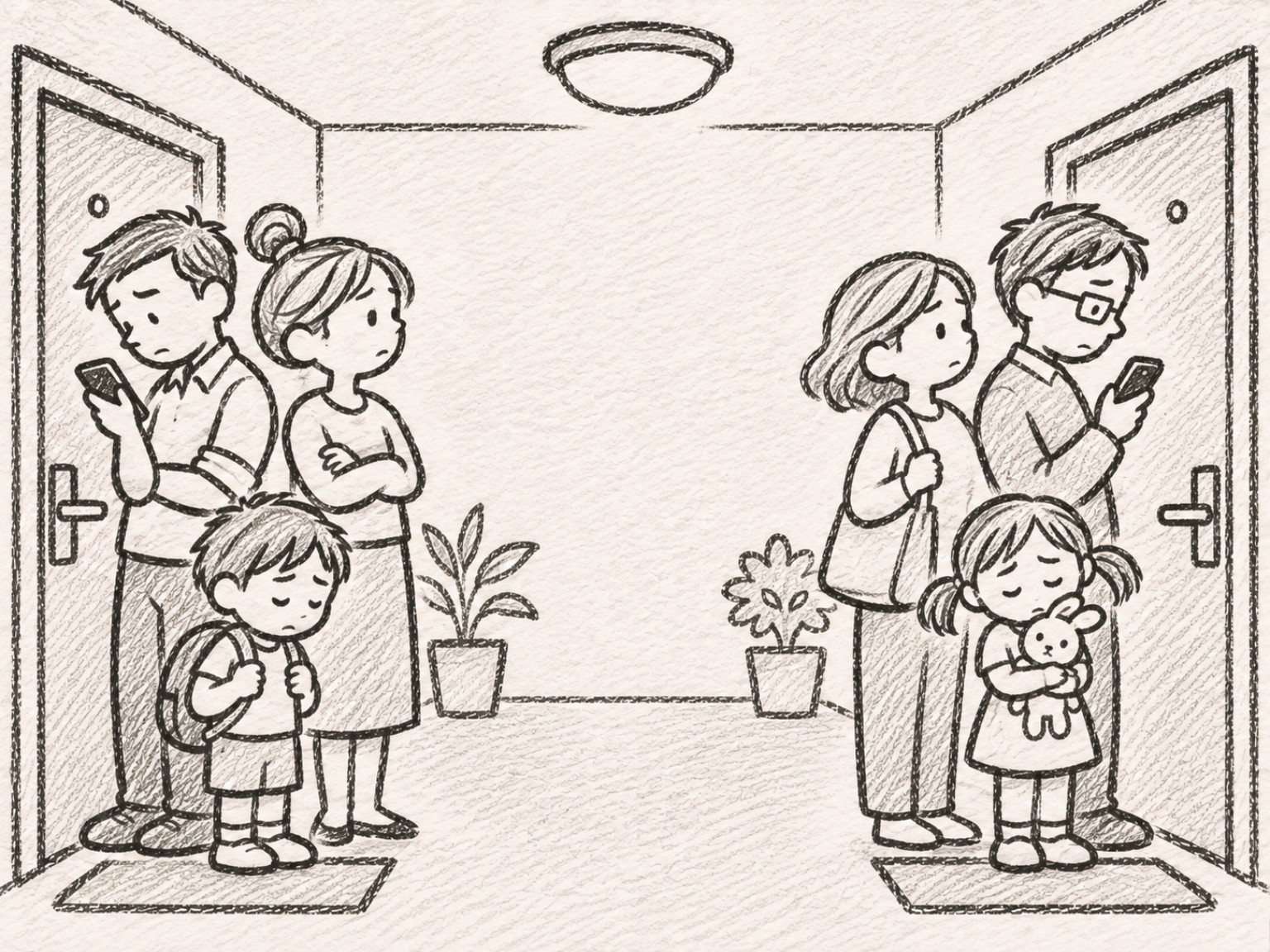
You hear this phrase constantly: “It once took a village to raise a child.” People say it with deep nostalgia, and then swiftly move on to the harsh reality: we are isolated, we have nobody to lean on. Meanwhile, in reality, two families live in the very same building, their children share a classroom, yet the parents have done nothing more than exchange polite nods by the elevator for five years. Neither has ever asked the other to watch their child for two hours.
What we try first
Usually, we do nothing. We wait for someone else to step forward and offer. When nobody does, we conclude that times have changed, society is atomized, and people are simply too busy. It sounds like sociological insight, but in truth, it is just a rationalization of our own silence.
What changes the picture
The village did not disappear because of modern times. It disappeared because asking for help became culturally embarrassing.
Today, it is far easier to offer assistance than to request it. Offering feels comfortable; it places us in a position of strength and generosity. Asking requires admitting that we cannot manage everything alone, and in our generation, that feels like a failing grade. So every family stands at the ready with an unused offer to help, and nobody ever dares to open the reciprocal account.
Yet the traditional village never ran on efficiency; it ran on mutual indebtedness. I help you today, you help me on Friday, and the account is intentionally left open. That unsettled ledger was the relationship. When one party insists on settling every account immediately, the bond terminates, because there is no longer a reason to turn to one another.
That is why a community is never built through grand agreements, endless WhatsApp groups, or parenting apps. It is built when someone takes the modest vulnerability of asking for a small favor first, thereby giving the other permission to ask in return.
There is another layer that explains why one-sided offers fail. When one family only ever gives, the other gradually feels treated like a charity case rather than an equal neighbor. Assistance that flows in only one direction is not a relationship; it is patronage, and human dignity compels people to decline it. The offering family then assumes nobody needs help and withdraws.
And here is the uncomfortable truth: everyone is waiting for someone else to make the first move. That is the sole reason the village is missing.
The same dynamic at work
A team where members never ask anything of one another is not a team; it is merely a collection of individuals working side by side. Genuine collaboration does not ignite when someone says “let me know if you need anything”; it sparks when someone has the humility to admit “I don’t know how to solve this.” Only then do others feel safe enough to follow.
What you can do today
This week, ask another family for one small favor. Do not offer—ask. Thirty minutes of watching the kids, carpooling to practice, an extra plate of dinner. The smallness of the request is what makes it powerful: it opens the door to connection without overwhelming anyone.
The underlying habit
Create synergy. Synergy never begins with unilateral giving; it begins with the vulnerability of asking. As long as everyone only offers, everyone remains polite, guarded, and entirely disconnected.