Where this shows up
We buy the toy the child really wanted. The child is genuinely thrilled, and that moment is wonderful and worthwhile. The joy lasts two days, maybe a week if the toy is well-designed. And then it gets left behind and forgotten.
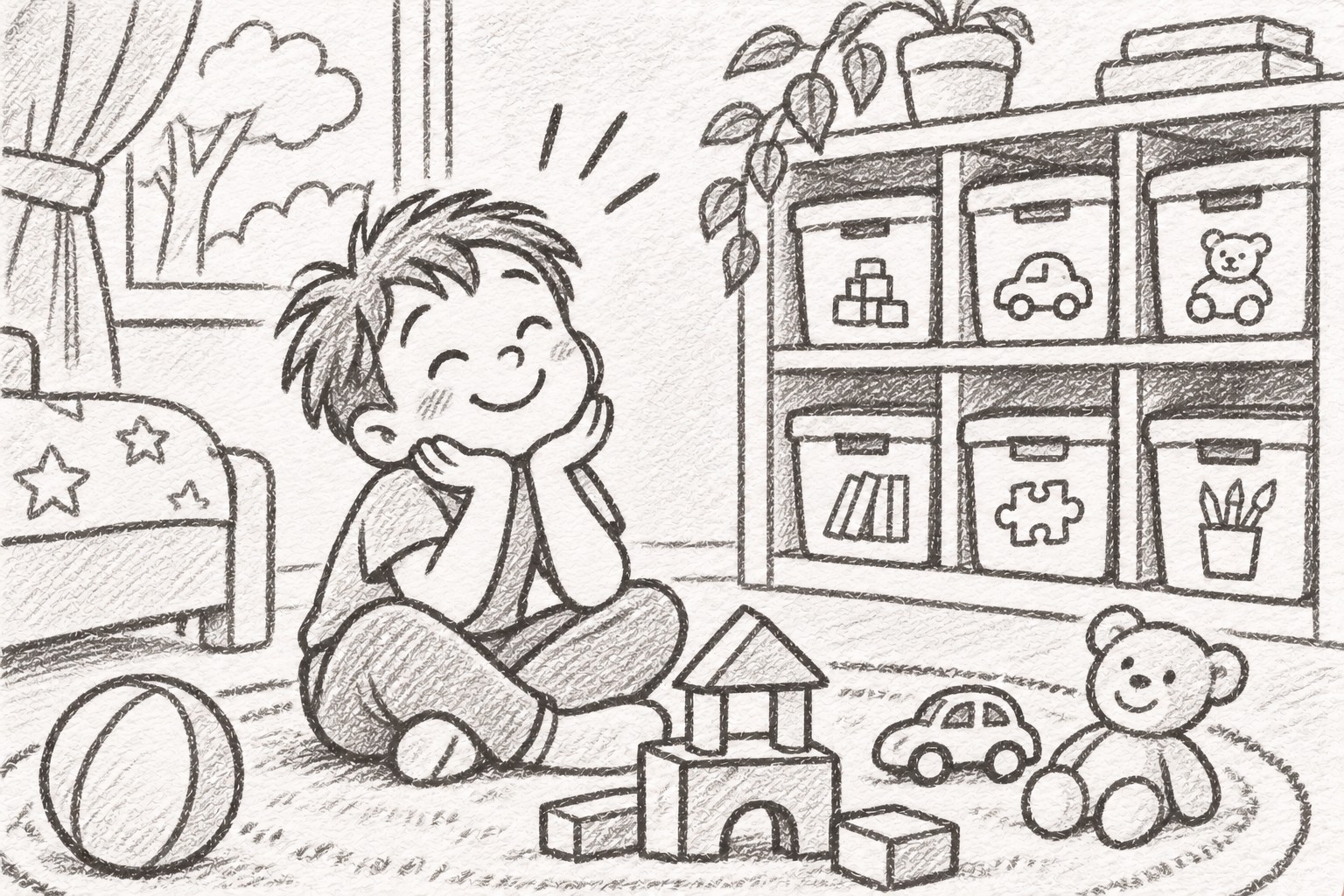
The toy lingers for two whole years. It gets wiped down, put away, search parties are launched for its lost pieces, it breaks, gets glued, demands shelf space, people trip over it in the dark, and negotiations are held around it every single time the room must be tidied.
What we try first
First we buy storage bins. Then shelving units. Then woven baskets with lids and labeled organizers. When even that fails to stem the tide, we catch ourselves dreaming of a larger apartment, as if the problem were square footage.
What changes the picture
We didn't just buy a toy. We signed an open-ended maintenance contract.
Every object that enters our home brings invisible monthly overhead: it claims physical volume, requires a dedicated parking spot, demands someone wipe it down, and eventually forces someone to decide what to do with it once outgrown. That labor is neither compensated nor fairly shared; it quietly shifts toward whichever person in the house suffers the most from visual disorder.
Scale is what changes everything. The price tag on the shelf reflects a single fleeting transaction. The true cost is that price multiplied by the number of months the item will occupy the home, multiplied by the number of times it must be retrieved from the floor. A cheap plastic trinket costing five dollars can easily demand two hundred rounds of tidying up.
That is why overflowing homes do not feel prosperous—they feel exhausted. They are not simply overcrowded with possessions; they are overcrowded with unassigned labor nobody asked for. Relieving that burden does not begin with buying more storage bins, but by letting fewer objects cross the threshold.
This is not a call for deprivation. A child for whom we buy fewer novelties, but with whom we spend the same quiet hour, hasn't received less. They have gained a parent who didn't spend half their week picking things up off the carpet.
The same thing at work
The exact same dynamic applies to workplace software and workflows. Every new project board, Slack channel, and weekly status report carries hidden maintenance. A team that perpetually adopts new tools without ever retiring old ones isn't getting work done after a year; it is merely maintaining the infrastructure where work used to happen.
What you can do today
Before making your next purchase, ask a single question: how many times will this item need to be picked up off the floor before my child outgrows it? If the answer is a large number, the number on the price tag was never the real cost.
The underlying habit
Put first things first. Priorities are not protected solely in your calendar; they must also be defended at the front door. Every item allowed inside will demand its slice of your day, and the day contains the exact same twenty-four hours after you bring it home.